No content results match your keyword.
Content

You have successfully logged out.


Not registered yet?
Intrafix® SafeSet Flush
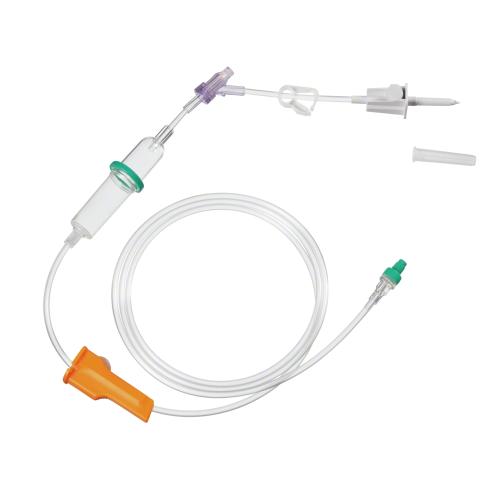
Intrafix® SafeSet Flush combines a Caresite® needlefree injection port with AirStop technology, allowing post-medication flushing via a syringe. This ensures complete delivery of the prescribed medication, minimising the risk of underdosing.
Due to residual volume in the administration set line, up to
0%
of the active prescribed drug may not be administered1
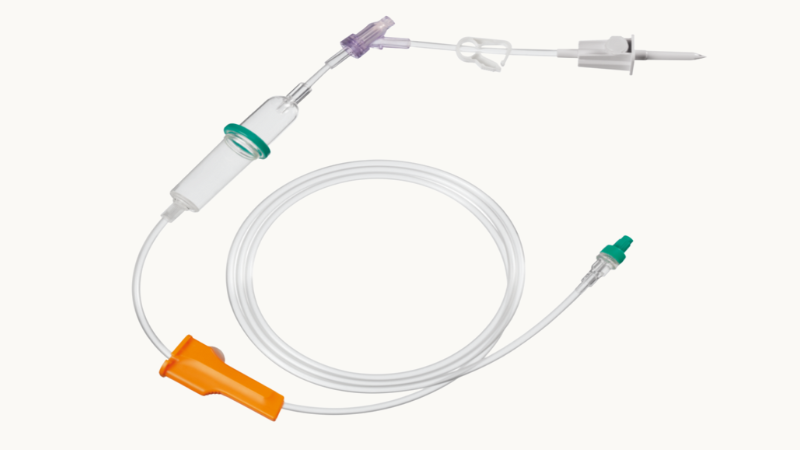
Intrafix® SafeSet Flush combines a Caresite® needlefree injection port above the drip chamber with AirStop technology at the base of the drip chamber. The combination enables the administration set line to be flushed post-medication via attachment of a small volume syringe to the Caresite® needlefree injection port. This permits the residual volume of prescribed antibiotic only to be administered to the patient, reducing the risk of air embolism and fluid overload which could occur if using a flushing bag.

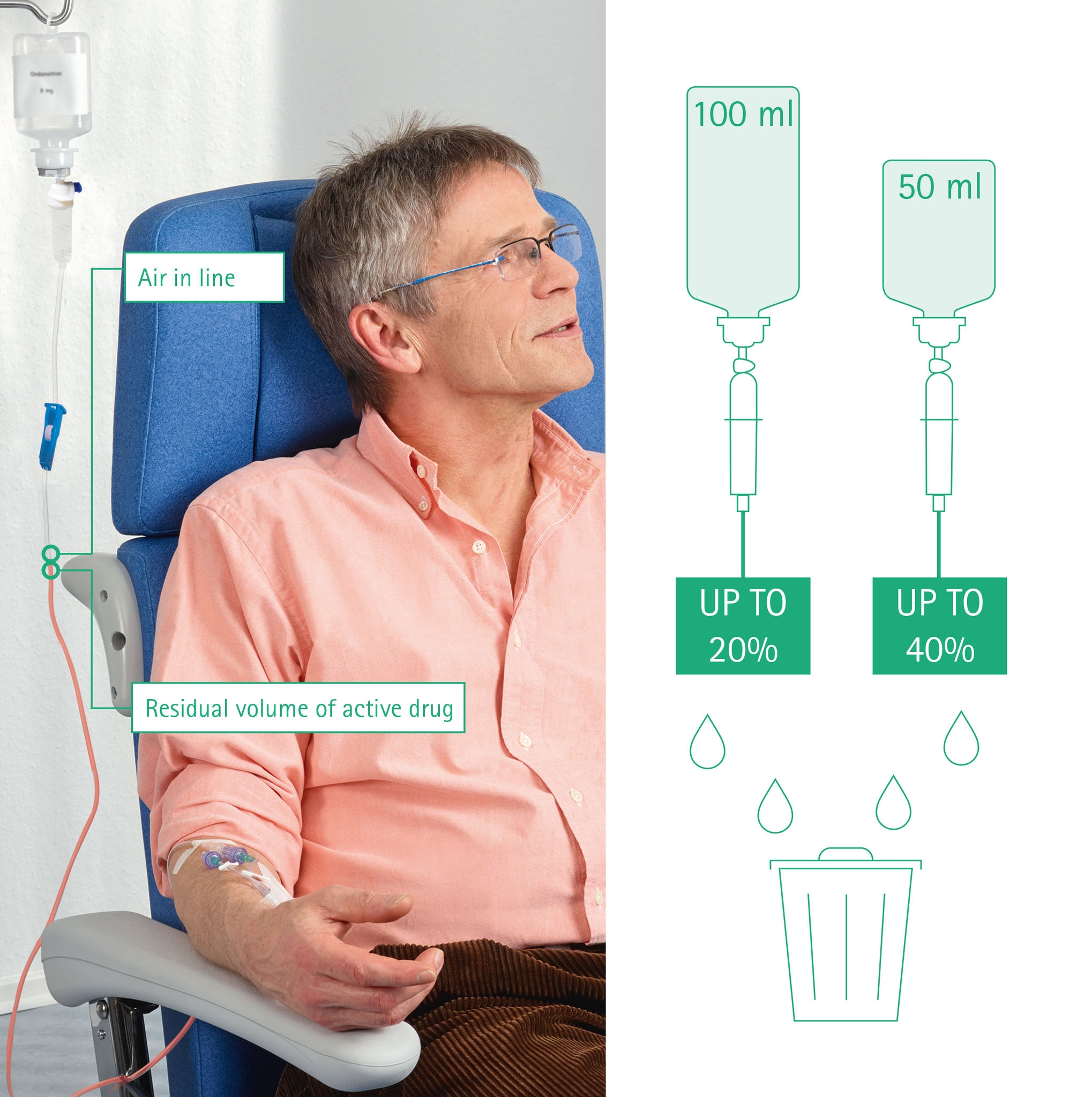
Short-term intermittent infusions, such as antibiotics, are commonly administered using gravity or infusion pump systems. In gravity sets, once the infusion container is empty, air is drawn into the line until equilibrium is reached between the line’s fluid level and the venous back pressure. This leaves a residual volume of antibiotic trapped within the tubing. Similarly, when using infusion pumps, the line remains filled with antibiotic, even after the programmed volume has been delivered.
It’s a common misconception that flushing only the short extension line (needlefree connector) post-infusion adequately clears the medication. In reality, a significant amount of antibiotic remains in the administration set itself—often overlooked—which can lead to underdelivery of the prescribed dose by as much as 20% for a 100 ml infusion and up to 40% for a 50 ml infusion.
Resistance is a natural biological phenomenon, but misuse of antibiotics is accelerating the process. For example, the under delivery of antibiotics reduces the likelihood of delivering the expected therapeutic effect resulting in subtherapeutic levels, which could be a significant contributor to the development of resistance strains3
Under delivery is accumulative, with a study from one NHS Teaching Hospital highlighting that a patient on an antibiotic regime prescribed for 12 weeks, was under delivered 16 ml with each infusion, resulting in an accumulative effect of 12 missed doses12
The accumulative effect of under delivering IV anibiotics could delay the swith to oral, increasing the patient's length of stay, spend on medication and consumable waste.
The B. Braun team work in partnership with you to provide continuous support and education throughout the life of the products you purchase from us. When you choose to introduce Intrafix® SafeSet Flush into your organisation, our dedicated team of Clinical Therapy Specialists will provide you with complimentary ongoing clinical education support.
Find out moreAntibiotic underdosing and disposal in NHS organisations across Great Britain
Research Report & Policy Brief
pdf, 1.5 MB
Antimicrobial Stewardship & Patient Safety Improvements
Clare Goodyear – Salisbury NHS Foundation Trust
pdf, 615.2 KB
Antimicrobial Stewardship in OPAT
Laura Maclachlan – Hull University Teaching Hospitals NHS Trust
pdf, 842.3 KB
Non-flushing of IV administration sets: an under-recognised under-dosing risk.
Dawn Michelle Cooper, Thomas Rassam, Adrian Mellor
link
Minimising under dosing of prescribed treatments in critical care
Ruth Dando, Head of Nursing, Theatres, Anaesthetics and Critical Care
pdf, 333.3 KB
Claire Davies, Paediatric Nurse & Clinical Therapy Manager, B. Braun Medical
Dr Emma Boldock, Consultant Microbiologist, Sheffield Teaching Hospitals NHS Trust
Dr Dagan Lonsdale, Consultant Intensivist, St George’s University Hospitals NHS Foundation Trust
Ruth Dando, Head of Theatres, Critical Care and Anaesthetics, Barking, Havering and Redbridge University Hospitals NHS Trust
Claire Davies, Paediatric Nurse & Clinical Therapy Manager, B. Braun Medical
Phil Hazeldine, ED Nurse & Clinical Therapy Manager, B. Braun Medical Ltd
Ruth Dando, Head of Theatres, Critical Care and Anaesthetics, Barking, Havering and Redbridge University Hospitals NHS Trust
Mark Santillo – Former Chair of the NHS Pharmaceutical Quality Assurance Committee
Kate Holland – Royal Bournemouth Hospital
Andrew Barton – Frimley Health NHS Foundation Trust
Please complete the form below to request samples of Intrafix® SafeSet Flush or to request support from our Clinical Therapy Specialist team
The personal data you provide on this form will be collected by B. Braun Medical Ltd in accordance with the Data Protection Act 2018 and UK GDPR.
This data may be sent to our third party customer database manager who will hold your data on EU servers and contact you to confirm your future marketing preferences. In providing your personal or business data you consent for such data to be used for the purpose of receiving contact about products and services from B. Braun Medical Ltd.
Please see the detailed Privacy Policy on our website: www.bbraun.co.uk or by clicking here.
1. Santillo, M (2022) IV Forum; Advancements in IV Administration, https://www.youtube.com/watch?v=0WAupmxRDTY
2. Cooper DM, Rassam T, Mellor A. Non-flushing of IV administration sets: an under-recognised under-dosing risk. Br J Nurs. 2018 Jul 26;27(14):S4-S12. doi: 10.12968/bjon.2018.27.14.S4. PMID: 30048183.
3. Harding M, Stefka S, Bailey M, Morgan D, Anderson A. Best Practice for Delivering Small-Volume Intermittent Intravenous Infusions. J Infus Nurs. 2020 Jan/Feb;43(1):47-52. doi: 10.1097/NAN.0000000000000355. PMID: 31876774.
4. Roseau JB, Pradines B, Paleiron N, Vedy S, Madamet M, Simon F, Javelle E. Failure of dihydroartemisinin plus piperaquine treatment of falciparum malaria by under-dosing in an overweight patient. Malar J. 2016 Sep 20;15:479. doi: 10.1186/s12936-016-1535-8. PMID: 27646822; PMCID: PMC5028982.
5. National Infusion & Vascular Access Society, Intravenous Administration of Medicines to Adults: Guidance on ‘Line Flushing’, version 3, 2021
6. Barton, A (2022) Line Flushing – Changing the way we do things, presented at Infection Prevention Society IV Forum Conference, https://www.youtube.com/watch?v=eEOeYVjru00
7. Goodyear, C (2022) Poster presentation at the National Infusion and Vascular Access Society Conference, Antimicrobial Stewardship & Patient Safety Improvements:
8. The Royal Marsden NHS Trust Manual of Clinical and Cancer Nursing Procedures, tenth edition, https://www.rmmonline.co.uk
9. Journal of Infusion Nursing, Infusion Nurses Society, Infusion Therapy Standards of Practice, ninth edition Vol 47, number 51; https://www.ins1.org/publications/infusion-therapy-standards-of-practice/ Introducing the NIVAS Line Flushing Guidance