
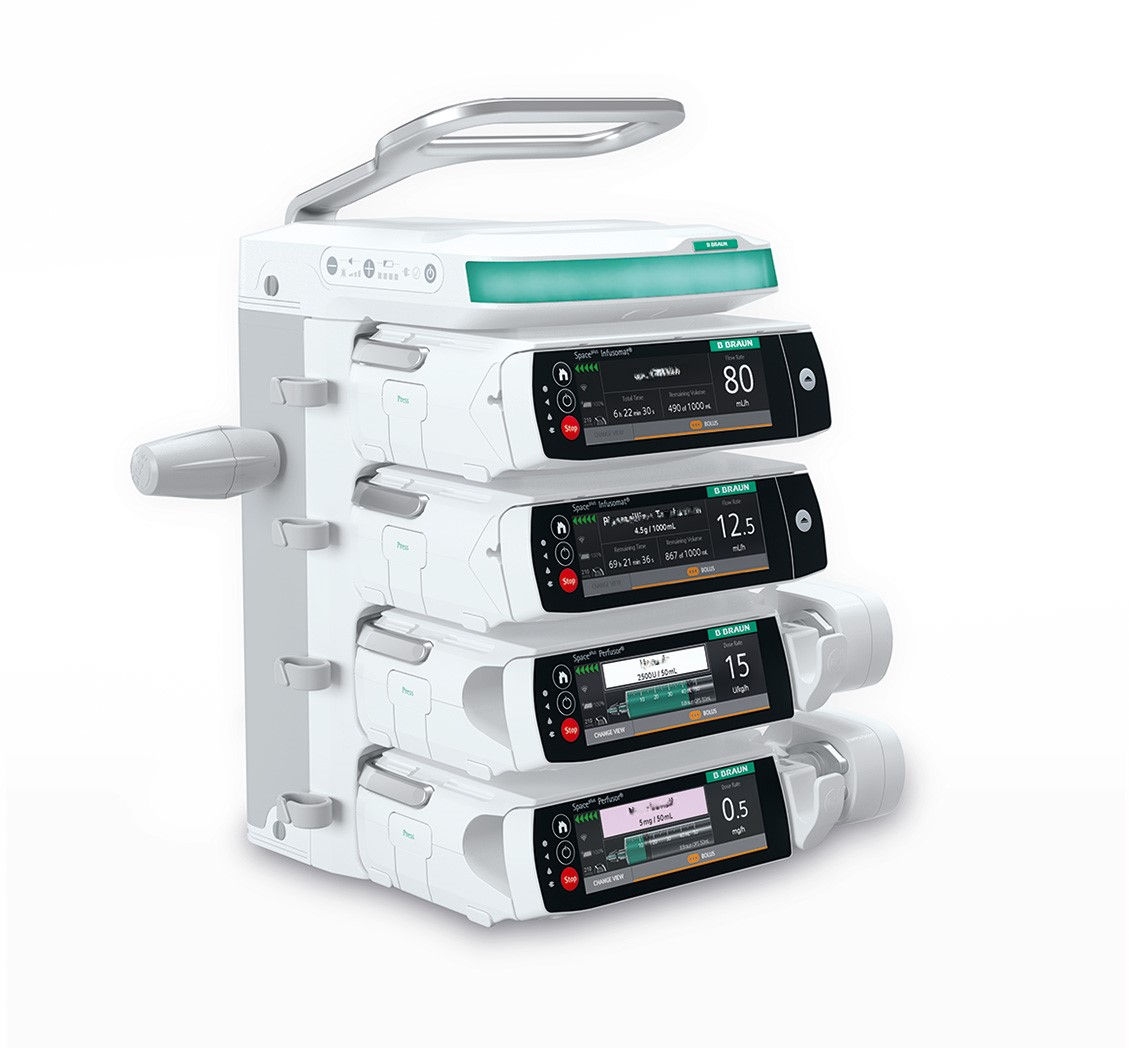
B. Braun SpacePlus infusion system
with DoseGuard® DERS

You have successfully logged out.


Not registered yet?
Supporting the advancement of medication safety and governance

By clicking "Confirm” you declare that you are a health care professional. If you are a member of the public, we will redirect you to the pages dedicated to you.
Confirm Yes, I am a health care professional. Cancel No, I am not a health care professional.Pharmacy teams play a central role in ensuring that the medications supplied across the hospital are safe and that their dosages are accurate and standardised. As a member of the pharmacy team, compliance is essential. Digital transformation, through B. Braun’s infusion therapy services, supports your mission with connected systems, measurable safety outcomes, and partnership-based expertise that can simplify complexity while strengthening control.
Our solutions are trusted by NHS organisations, helping teams improve medication safety, streamline workflows, and strengthen governance across every area of care.
Pharmacy teams face the challenge of tracking hundreds or even thousands of infusions every day across the hospital. Manual programming, fragmented data and complex and time consuming library updates create inconsistencies between policy and practice, while limited integration with prescribing systems means limited visibility and increased risk of transcription and medication errors.
At B. Braun, we are aware of these challenges and have created an infusion therapy ecosystem that can align pharmacy oversight with digital precision. This includes automated workflows, real-time monitoring, and bi-directional communication between devices and hospital systems, as well as advanced drug library management with intuitive tools. These help you to trace every infusion from prescription to administration and ensure that they adhere to validated protocols. The result is greater consistency, fewer errors and stronger compliance without increasing workload.
See how this NHS case study demonstrates B. Braun’s role in optimising drug libraries and enabling auto-programming workflows, helping to reduce risk and improving prescription accuracy in critical care.
View real-world dataB. Braun partners with hospital pharmacy teams to help make medication management safer, more consistent and more efficient. Support extends far beyond device implementation. Our Medicines Safety Team (MST) and Clinical Therapy Specialist (CTS) teams collaborate directly with pharmacy leaders to align local protocols, validate drug libraries and deliver ongoing optimisation and governance support.
This partnership model ensures that infusion therapy governance remains pharmacy led and data driven. From library creation and validation to real world monitoring and refinement, B. Braun provides the tools and human expertise required to maintain compliance across every stage of the infusion process.
Bespoke drug library consultation: Working with Pharmacists and Clinicians to co-develop a tailored drug library to suit your clinical requirements.
Support from our Clinical Therapy Specialist and Medicines Safety : On-site education for the pharmacy team, competency training and tailored pharmacy support from your infusion experts.
Specialised expertise for clinicians and pharmacists: Our teams bring specialised experience across a range of targeted infusion types, including target-controlled infusion (TCI) and patient-controlled analgesia (PCA), spanning diverse therapeutic areas, including neonatal care and oncology.
Structured change management: Support throughout the process, from initial workflow mapping and policy alignment through to post-implementation review.
Dedicated project team: Our multi-disciplinary team guides you through planning, implementation and optimisation to ensure a smooth transition to connected infusion therapy.
Continuous partnership: We move beyond a transactional relationship to a dedicated, long-term partnership. We conduct regular audits, health checks and performance reviews to maintain compliance and drive continuous improvement.
Infusion therapy across an entire hospital is complex and fragmented. Partnership with B. Braun and access to its infusion therapy ecosystem allows your teams to bring together the software, devices and data that have the power to connect systems and improve medication safety. Each component within the ecosystem contributes to a unified, closed-loop workflow designed for precision, traceability and clinical assurance.
DoseGuard® Dose Error Reduction Software (DERS): Includes critical error-reduction features such as weight-based limits, titration limits, tall-man lettering and colour-coded ISO alignment. These features are designed to prevent misselection and dosing errors to support patient and clinician safety.
DoseTrac® Analytics: Provides detailed reporting for governance, compliance and performance monitoring, helping organisations track infusion safety and policy adherence.
Advanced Drug Library Management: Reduces variation and ensures compliance through intuitive, centralised tools.
Smart Pump-EPR Interoperability: Enables auto-programming and auto-documentation, reducing manual steps, transcription errors and eliminating documentation gaps.
OnlineSuitePlus: Enables remote configuration, device monitoring, and reporting across the hospital network for efficient fleet management.
Ensuring Total Dose: Ensures complete medication delivery and minimises underdosing, meeting intravenous access (IVA) standards for safety from set up to delivery with Intrafix® SafeSet Flush. This is critical, as up to 40% of the prescribed IV antibiotic dose may remain in administration set lines if not flushed1.
Training Videos and e-learning: Supports staff competency and improves consistency in practice.
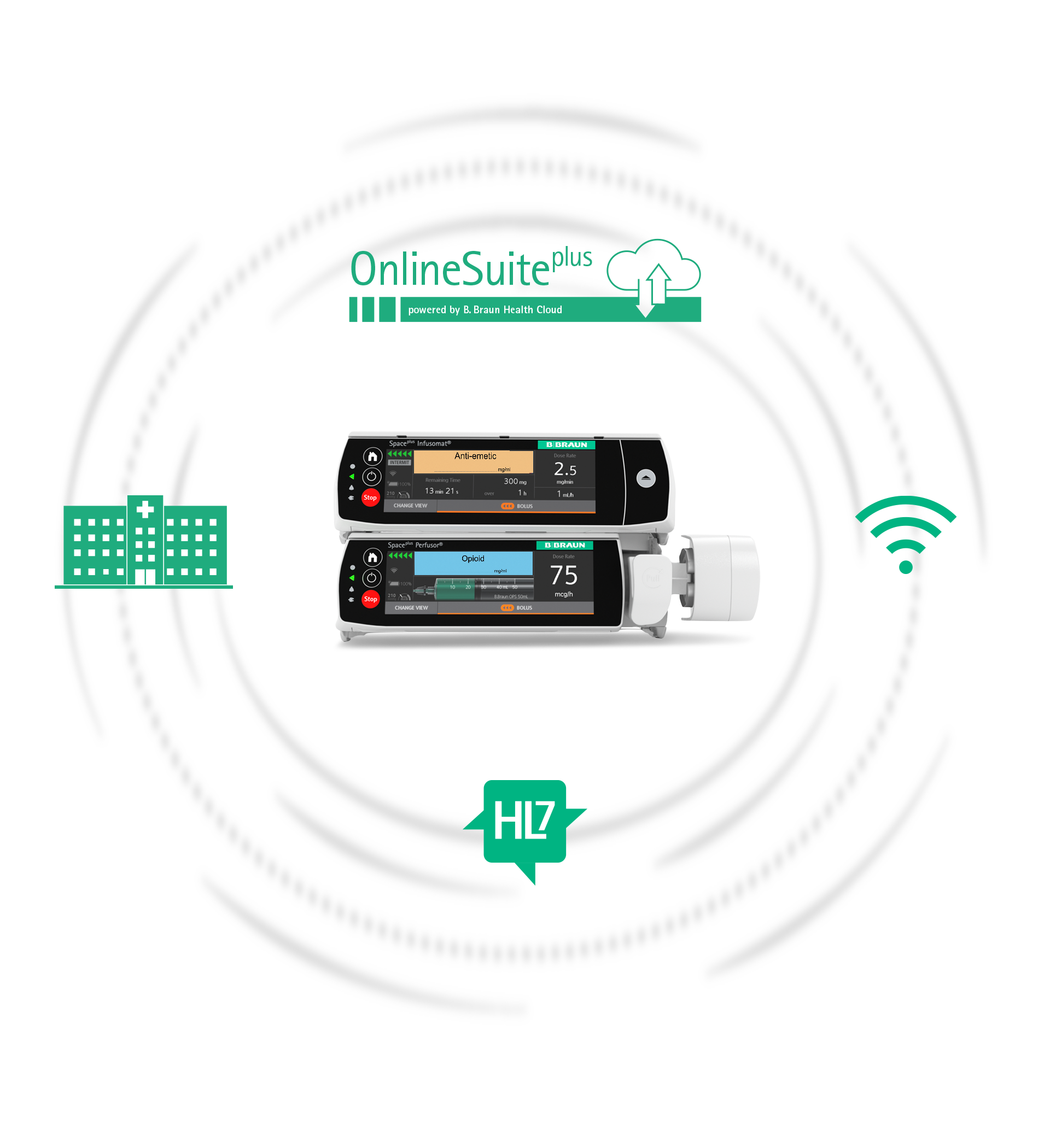
Studies show that smart infusion pumps, when combined with DERS and EPR integration, can help to improve patient safety, workflow efficiency and documentation accuracy.2-4
Reduces manual keystrokes by
0%
helping to lower transcription errors and save time at the bedside5
Up to
0%
more infusion rate changes documented with smart pump-EPR interoperability3
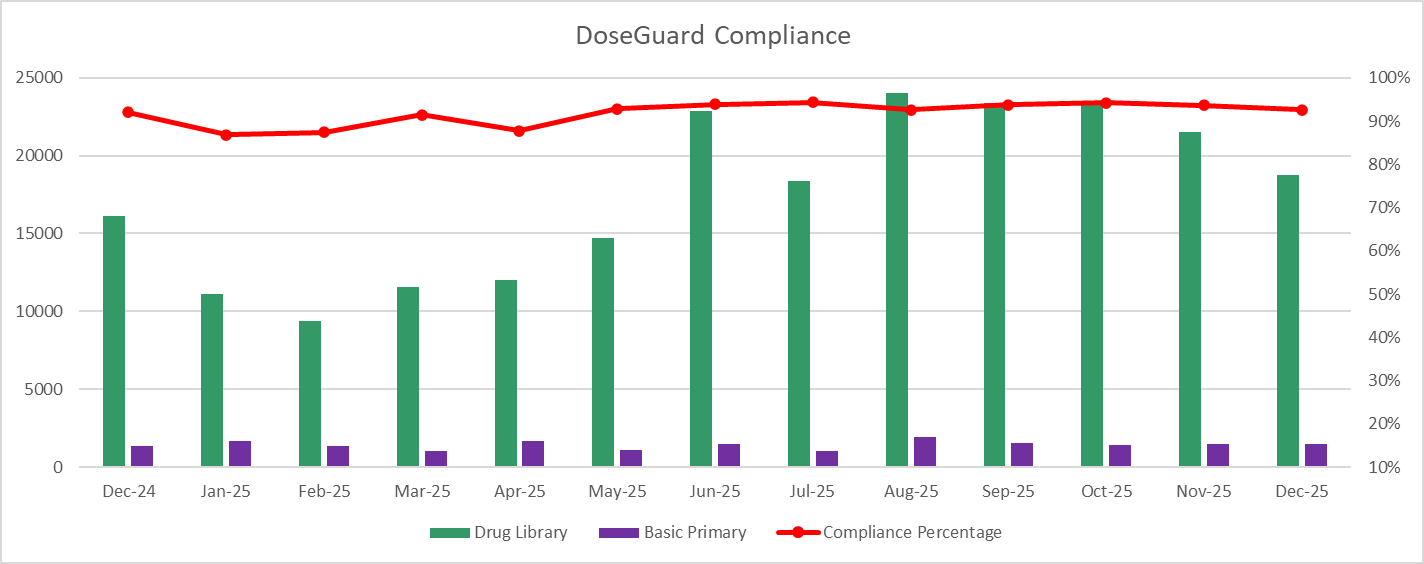 6. Illustrative data visualisation based on internal B. Braun DoseGuard compliance data (2025)’
Enhanced Compliance: Implementing smart pumps with DERS can achieve drug library compliance rates of up to 99.8%7, reinforcing adherence to standardised infusion protocols.
Safety Gains: Combining DERS with interoperability can help reduce infusion errors and high-risk overrides3, 5, with one paediatric study seeing high-risk overrides fall by 96%3.
Positive Clinician Feedback: 87.5% of ICU pharmacists reported that that smart pump-EPR interoperability provided more accurate and useful infusion data, with 75% indicating incremental value in patient care4.
Collaboration Impact: Partnership-driven approaches accelerate smart pump-EPR integration adoption and success rates, ensuring sustained compliance and safety improvements8.
Disclaimer: These findings are based on published research evaluating smart pump technology and interoperability in clinical settings. Results may vary depending on implementation, training, and local workflows.
B. Braun’s infusion therapy service is designed to help your organisation realise these evidence-based improvements by combining:
with DoseGuard® DERS

for near real-time insights and governance monitoring

for auto-programming and auto-documentation

to ensure optimal implementation and sustained adoption
The system connects pharmacy, prescribing and clinical workflows into one closed-loop structure, ensuring full traceability and enabling real-time compliance monitoring through DoseTrac analytics.
Pharmacy teams own and maintain the drug library through DoseGuard®, define safety limits, and oversee compliance. B. Braun’s Medicines Management and Clinical Therapy Specialist teams provide ongoing partnership and training.
Drug libraries are updated remotely through OnlineSuitePlus, allowing new safety parameters and monographs to be deployed instantly without interrupting therapy.
Closed-loop integration with EPR and EPMA systems enables auto-programming and auto-documentation, which eliminates transcription errors and maintains data integrity.
B. Braun offers post-implementation audits, health checks and data-driven optimisation reviews to sustain high compliance levels and align with governance standards.
1. Santillo, M., Advancements in IV Administration: The issue of underdosing, in IV Forum. 2022.
2. Biltoft, J. and L. Finneman, Clinical and financial effects of smart pump-electronic medical record interoperability at a hospital in a regional health system. Am J Health Syst Pharm, 2018. 75(14): p. 1064-1068.
3. VanHorn, T., et al., Evaluation of the Effect of Smart Pump Interoperability on Infusion Errors in the Pediatric Hospital Setting. J Pediatr Pharmacol Ther, 2024. 29(3): p. 323-330.
4. Joseph, R., et al., Impact of interoperability of smart infusion pumps and an electronic medical record in critical care. Am J Health Syst Pharm, 2020. 77(15): p. 1231-1236.
5. Bartos, D., et al., Outcomes from a Smart Infusion Pump and Electronic Health Record Integration: Improved Patient Safety, Nursing Efficiency, and Return on Investment. Journal of Informatics Nursing, 2022. 7(3): p. 13-19.
6. Illustrative data visualisation based on internal B. Braun DoseGuard compliance data (2025)
7. Krause, S. and D. Dulak, From Discovery to Implementation and Interoperability of a New Smart Infusion Pump Designed for Usability and Patient Safety. Proceedings of the International Symposium on Human Factors and Ergonomics in Health Care, 2023. 12(1).
8. Romp, C.R., et al., Collaboration to Remove Barriers to Pump Integration With the Electronic Health Record. J Healthc Qual, 2024. 46(6): p. 359-364.