No content results match your keyword.
Content

You have successfully logged out.


Not registered yet?
We understand the gravity of the situation
The former head of the ASBH (Spina Bifida and Hydrocephalus Working Group) Ms Schlegel, who devoted herself to the lives of her members, once told us that hydrocephalus turns patients’ lives upside down. So we wanted to know more. To understand in more detail how people deal with hydrocephalus in their everyday life, what challenges a patient, their relatives, doctors and nursing staff can expect. We believe that “people who better understand can also help better”.
We call ourselves the Aesculap-MIETHKE family. We are made up of staff from Aesculap and MIETHKE who are passionate about developing and sharing technologies that will help hydrocephalus patients all across the world to live a life as normal as possible. Once a year, the family meets in Potsdam to exchange experiences, to learn from users and patients, to discuss new ideas and, of course, to celebrate. And we have every reason to do so, because our ideas and the products that result from them are helping more and more patients worldwide. Our steady growth is not the result of calculating strategic planning. It is based on our closeness to our customers and patients, respect for their concerns and special requirements and a deep, emotional commitment to developing the right products for them. We want our work to offer patients more stability in their lives. What started off as an idea quickly became a passion that led to the creation of “We understand”.
We want to use this campaign to show our solidarity with patients who, despite the numerous obstacles in their life, find a way to defy their symptoms and with the doctors and nurses treating them who take great care of their patients and always try to find the best possible treatment solution.

We strive to understand both the significant challenges faced by the surgeon as well as the serious needs of the hydrocephalus patient. It is with this understanding that we develop and produce gravitational valves which substantially improve the quality of patient‘s lives.
Gravity – the force that attracts a body towards the centre of the earth.
Gravity – a serious situation or problem.
Gravity – dignity or sobriety of bearing.
Our approach to improve technology and provide a better life for patients is the result of an innovative and systematic professional analysis of technological options. As a result, MIETHKE gravitational valves lower the risk of complications for patients with hydrocephalus. 1,2,3,4,5,6,7,8,9,10
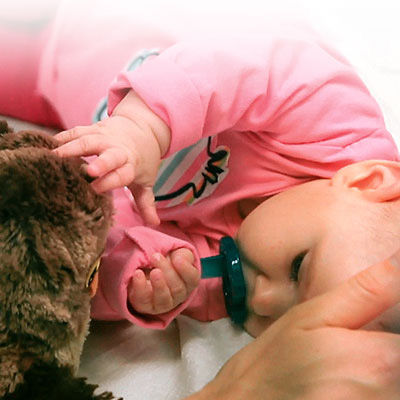
Every surgeon and every patient has different demands, different challenges and different perspectives. With our products and performance we reconcile every perspective. Confidence as well as competence are represented powerfully and authentically.
Google Play preview and free download >>
Google Play preview and free download >>
(1) Tschan CA, Antes S, Huthmann A, et al. Overcoming CSF overdrainage with the adjustable gravitational valve proSA. Acta Neurochir (Wien). 2014;156(4):767-76; discussion 776.
(2) Suchorska B, Kunz M, Schniepp R, et al. Optimized surgical treatment for normal pressure hydrocephalus: comparison between gravitational and differential pressure valves. Acta Neurochir (Wien). 2015;157(4):703-9.
(3) Golz L, Lemcke J, Meier U. Indications for valve-pressure adjustments of gravitational assisted valves in patients with idiopathic normal pressure hydrocephalus. Surg Neurol Int. 2013;4:140.
(4) Lemcke J, Meier U, Muller C, et al. Safety and efficacy of gravitational shunt valves in patients with idiopathic normal pressure hydrocephalus: a pragmatic, randomised, open label, multicentre trial (SVASONA). J Neurol Neurosurg Psychiatry. 2013;84(8):850-7.
(5) Sprung C, Schlosser HG, Lemcke J, et al. The adjustable proGAV shunt: a prospective safety and reliability multicenter study. Neurosurgery. 2010;66(3):465-74.
(6) Thomale UW, Gebert AF, Haberl H, et al. Shunt survival rates by using the adjustable differential pressure valve combined with a gravitational unit (proGAV) in pediatric neurosurgery. Childs Nerv Syst. 2013;29(3):425-31.
(7) Xinxing L, Hongyu D, Yunhui L. Using individualized opening pressure to determine the optimal setting of an adjustable proGAV shunt in treatment of hydrocephalus in infants. Childs Nerv Syst. 2015;31(8):1267-71.
(8) Chari A, Czosnyka M, Richards HK, Pickard JD, Czosnyka ZH. Hydrocephalus shunt technology: 20 years of experience from the Cambridge Shunt Evaluation Laboratory. J Neurosurg. 2014;120(3):697-707.
(9) Gebert AF, Schulz M, Schwarz K, et al. Long-term survival rates of gravity-assisted, adjustable differential pressure valves in infants with hydrocephalus. J Neurosurg Pediatr. 2016;17(5):544-51.
(10) Toma AK, Watkins LD. Surgical management of idiopathic normal pressure hydrocephalus: a trial of a trial. Br J Neurosurg. 2016;30(6):605.


